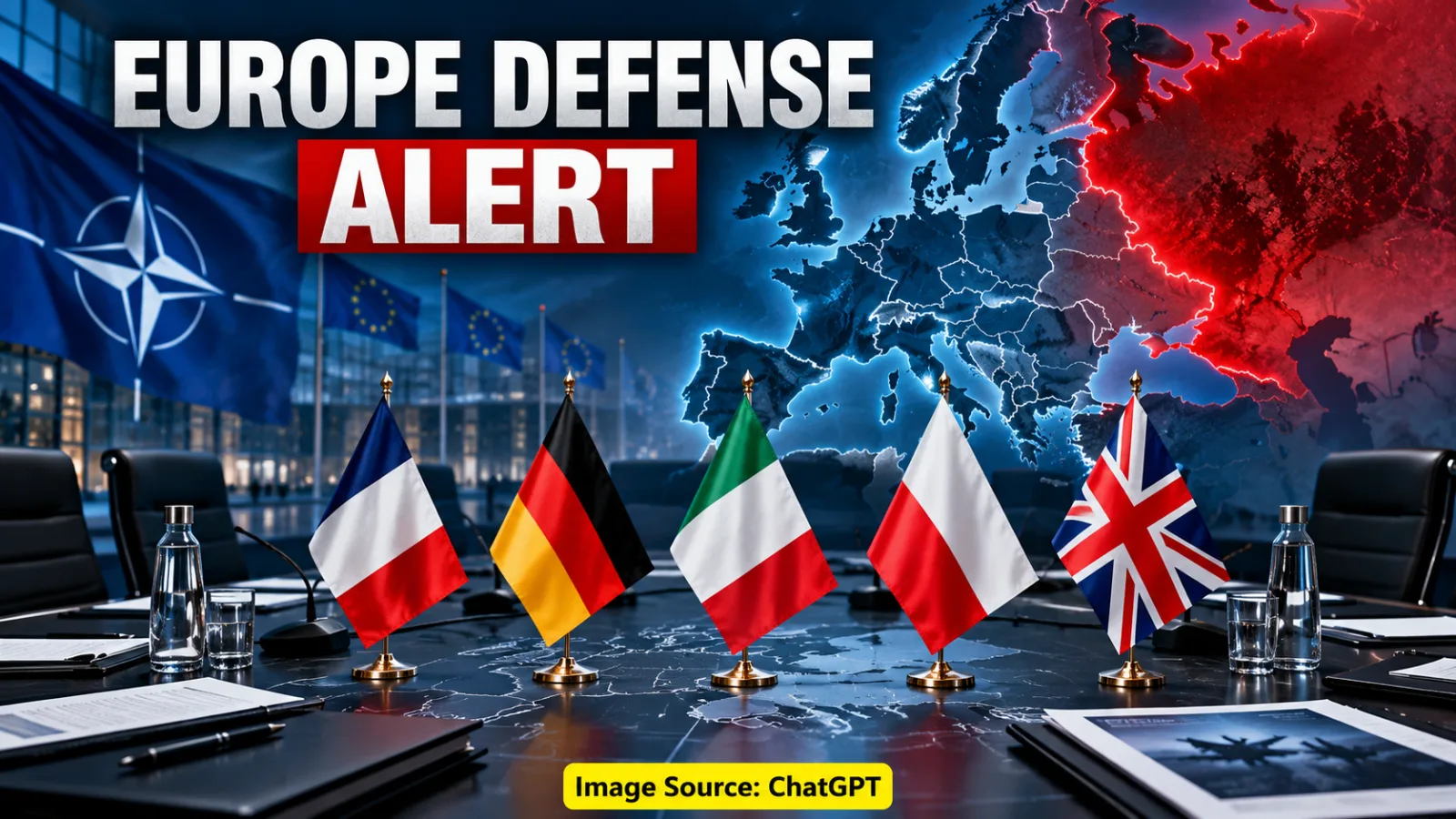
The European Union has warned that escalating attacks on civilian ships and commercial infrastructure in the Black Sea are endangering human lives, threatening the security of European countries and placing additional pressure on global food supplies.
Speaking before the European Parliament in Strasbourg on October 20, 2026, EU foreign policy chief Kaja Kallas called for stronger maritime defenses, improved international coordination and renewed diplomatic efforts to protect civilian shipping.
Her statement followed a series of suspected Russian drone attacks on commercial vessels operating near Romania and Bulgaria, two European Union and NATO member states.
Several attacks have occurred near or inside Romanian territorial waters, raising concerns that the conflict between Russia and Ukraine is increasingly affecting areas under the jurisdiction of other European countries.
Kallas said six attacks had occurred within ten days, while rescue teams continued searching for seven sailors missing following strikes on two chemical tankers near Romania's Black Sea coast.
The incidents have also heightened fears about the security of Ukraine's agricultural exports, a major source of food supplies for international markets.
According to figures presented by the EU foreign policy chief, Ukraine is losing an estimated €60 million in export revenues each day amid intensified attacks on its trade infrastructure.
The European Union is now pressing for an international agreement to restore safe passage for commercial vessels while coordinating additional surveillance and defensive measures with NATO.
The crisis presents an increasingly complex challenge for European governments: protecting maritime trade, preventing further civilian casualties and responding to the war's wider consequences without triggering a direct military confrontation between Russia and NATO.
Kaja Kallas Addresses European Parliament Over Black Sea Attacks
Kaja Kallas, the EU's High Representative for Foreign Affairs and Security Policy and Vice-President of the European Commission, delivered her remarks during a European Parliament debate on Russian attacks affecting EU security.
The debate focused particularly on the Black Sea, where merchant vessels, ports and critical trade routes have come under growing pressure.
Kallas accused Russia of intensifying attacks against civilians and expanding destabilizing activities beyond Ukraine.
She argued that the latest incidents require a stronger and more coordinated European response.
Her statement emphasized that the problem is no longer confined to Ukrainian ports or shipping routes.
Attacks near the coastlines of EU member states create additional security concerns for Romania, Bulgaria and the wider European community.
The EU foreign policy chief identified three areas requiring action: keeping Ukrainian exports moving, strengthening maritime security and increasing diplomatic pressure for safe passage.
These priorities provide the framework for the European Union's response.
Six Suspected Drone Attacks in Ten Days
One of the most alarming developments has been the concentration of attacks against merchant vessels.
Kallas told European lawmakers that six incidents involving suspected Russian drones had occurred over a ten-day period.
The attacks involved shipping in and around the western Black Sea, including areas close to Romania and Bulgaria.
Commercial vessels have been damaged, fires have broken out aboard tankers, and crew members have been killed or reported missing.
The pattern has raised questions about the safety of shipping routes previously considered less exposed than the waters immediately surrounding Ukraine's principal ports.
Military analysts have linked the attacks to Russia's continuing campaign against Ukrainian infrastructure and trade.
However, NATO had not formally assigned responsibility for the full series of incidents as of October 20.
Russia has denied involvement in the attacks.
This distinction matters because determining the origin of an individual drone and establishing responsibility for a military operation can require separate investigations.
European officials continue to press for accountability while maritime and military authorities examine the available evidence.
Seven Sailors Missing After Two Tankers Are Struck
The human consequences became particularly clear following attacks on two chemical tankers near Romania's coast.
On October 15, authorities reported that seven sailors were missing after drones struck the San Marino-flagged Wine Trader and the Comoros-flagged Yara J.
The Wine Trader was attacked approximately 13 nautical miles southeast of the Sulina Canal, just outside Romanian territorial waters.
Five of its twelve crew members were rescued, while seven remained missing in the initial reports.
The Yara J was struck inside Romanian waters, approximately eight to ten miles southeast of Sulina.
All crew members aboard the second vessel were reported safe.
The strikes caused fires and prompted an emergency response.
Romanian authorities deployed helicopters and rescue vessels, but severe sea conditions complicated search-and-rescue efforts.
The incidents demonstrate the vulnerability of commercial sailors operating in areas affected by military activity.
Crew members aboard merchant vessels are not combatants simply because their ships travel through strategically important waters.
Their safety is a central concern in the current crisis.
Romania Confirms Drone Attacks but Attribution Remains Disputed
Romanian President Nicușor Dan confirmed that the tankers had been struck by drones.
He did not initially make a definitive public attribution of responsibility to Russia.
However, a NATO military source cited by Reuters identified the drones involved in the tanker attacks as Russian in origin.
NATO subsequently announced additional maritime security measures but stopped short of formally attributing the broader series of attacks to a particular state.
The distinction reflects the importance of forensic investigation and reliable intelligence.
Drone debris, flight characteristics, explosives and other technical information can help investigators identify the weapons involved.
However, public statements by individual officials do not necessarily represent a completed institutional determination.
For European leaders, the immediate priority has been responding to the danger while gathering more information.
The incidents have also intensified calls for stronger surveillance and rapid coordination between national authorities and NATO.
Romanian Fighter Jets Shoot Down Drones Over Territorial Waters
The threat to Romanian territory became more visible on October 17.
According to Kallas's statement, Romanian F-16 fighter jets intercepted and destroyed two drones over Romanian territorial waters.
The EU foreign policy chief argued that the interceptions prevented a possible additional danger to people and infrastructure.
The operation illustrates how the Black Sea security crisis is affecting the defensive responsibilities of NATO member states.
Romania must monitor its airspace and coastal waters while continuing to support international shipping and cross-border economic activity.
Interceptions can prevent immediate threats, but they also require rapid identification, military readiness and careful assessment.
Drones may be difficult to detect or distinguish from other objects, particularly in crowded maritime environments.
The October 17 incident has therefore added urgency to discussions about improved air surveillance and counter-drone capabilities.
Why the Black Sea Matters to European Security
The Black Sea is a strategically important body of water bordered by several countries, including Ukraine, Russia, Romania, Bulgaria, Türkiye and Georgia.
It supports commercial shipping, agricultural exports, energy transportation and regional trade.
For Ukraine, access to the sea is particularly important because major agricultural and industrial products traditionally reach international markets through Black Sea ports.
Romania's coastline and the Danube Delta provide additional commercial routes.
Bulgaria also depends on secure maritime access for ports, tourism and international business.
Türkiye controls access between the Black Sea and the Mediterranean through the Turkish Straits under an established international legal framework.
Military activity in this region therefore has consequences far beyond the immediate Russia–Ukraine front line.
Attacks near Romanian or Bulgarian waters raise concerns about wider European security and the possibility of unintended escalation.
The Difference Between Territorial Waters and Economic Zones
Not every incident described as occurring near NATO territory takes place within a member state's sovereign territorial sea.
International maritime law distinguishes between different maritime zones.
A country's territorial sea generally extends up to 12 nautical miles from its coastal baseline, subject to applicable international rules.
Within that area, the coastal state exercises sovereignty, although foreign vessels retain certain navigation rights.
An exclusive economic zone, or EEZ, is different.
A coastal state has defined rights relating to resources and certain economic activities in its EEZ, but it does not possess the same degree of sovereignty over those waters as it does in its territorial sea.
Other states retain important navigation freedoms.
This distinction matters in the Black Sea because several recent attacks occurred within or near Romanian and Bulgarian economic zones, while at least one tanker attack was reported inside Romanian territorial waters.
The location of an incident can influence legal assessments, diplomatic responses and NATO security discussions.
However, the safety of civilian sailors remains important regardless of the precise maritime boundary.
European Union Says Attacks Threaten International Maritime Law
The European Council addressed the escalating situation during its October 15–16 summit.
EU leaders condemned attacks on civilian vessels, ports and agricultural infrastructure.
They described the recent shipping incidents as unacceptable and serious violations of international and maritime law.
The leaders specifically referred to attacks involving vessels in the economic zones of Bulgaria and Romania.
They also called for the immediate restoration of safe passage for civilian, merchant and commercial shipping in the Black Sea.
These conclusions establish the EU's collective political position.
They do not constitute a completed judicial finding establishing responsibility for every individual incident.
Nevertheless, they demonstrate that the issue is now being treated as a broader European security concern.
The EU wants to prevent additional attacks and maintain the ability of civilian ships to operate without facing unacceptable military risks.
Ukrainian Grain Exports Face Growing Disruption
Ukraine is one of the world's major agricultural exporters.
Its production of wheat, maize, barley and sunflower oil contributes to food supplies in numerous countries.
Kallas emphasized the scale of Ukraine's role in international agricultural trade.
According to the shares she cited, Ukraine accounts for approximately 15% of global maize exports, 10% of wheat exports, 15% to 20% of barley exports and half of sunflower oil exports.
These figures were presented in her October 20 statement and reflect the EU's assessment of Ukraine's importance to food markets.
Kallas also said that approximately 90% of the agricultural goods discussed move through the Black Sea corridor.
The route is therefore crucial for connecting Ukrainian farmers and exporters with international buyers.
When ships face attacks or ports are damaged, the effect extends beyond transportation.
It can reduce export revenues, increase delivery costs and create uncertainty for importing countries.
Ukraine Reportedly Losing €60 Million Daily in Export Revenue
The financial implications are substantial.
Kallas told the European Parliament that Ukraine was losing an estimated €60 million every day in export revenue because of the disruption.
That figure highlights the importance of agricultural trade to Ukraine's wartime economy.
Export income supports businesses, employment and economic activity.
Agricultural producers depend on the ability to sell crops internationally.
Transport companies, storage facilities, port operators and related industries are also affected.
When shipments are delayed or canceled, revenue may be postponed or lost.
Additional insurance, storage and transportation expenses can reduce profitability.
However, the €60 million figure is an EU estimate rather than a verified total for every individual day.
Actual losses may change with shipping activity, commodity prices and the availability of alternative export routes.
Russian Strikes Target More Than Commercial Ships
The EU's concerns extend beyond the recent incidents involving merchant vessels.
Kallas accused Russia of attacking multiple parts of Ukraine's agricultural export system.
These include port infrastructure, grain storage sites, border crossings, shipping routes and facilities used to load agricultural products.
Damage to any one component can disrupt the wider supply chain.
For example, a grain terminal may be unable to operate efficiently if its loading equipment is damaged.
A warehouse strike can destroy crops before shipment.
An attack on a railway connection may prevent grain from reaching a port even when vessels are available.
The combined effect can be more serious than the damage caused by a single incident.
The EU argues that attacks against these systems undermine Ukraine's economy and international food security simultaneously.
Russia has contested Western accusations about its military conduct, and responsibility for particular incidents should be evaluated against the available evidence.
Why Global Food Security Is at Risk
Food security depends not only on producing enough food but also on getting it to the communities that need it.
International agricultural trade connects countries with large crop production to countries that depend heavily on imports.
Shipping disruptions can affect that system in several ways.
Insurers may charge higher premiums for vessels entering dangerous waters.
Shipowners may avoid certain ports or postpone voyages.
Importers may look for alternative suppliers at higher prices.
Transport delays can also complicate inventory planning.
These effects are particularly significant for countries where food imports account for a large share of national consumption.
Higher prices can place additional pressure on household budgets and government finances.
The EU has warned that countries in Africa, Asia and the Middle East are especially exposed to the disruption of Ukrainian agricultural exports.
The effects will vary according to individual countries' import patterns and available alternatives.
Grain Prices Add to Concerns About Food Affordability
During her October 20 statement, Kallas said global grain prices had reached their highest level since February 2023.
She linked the wider pressure on food markets to a combination of conflict, adverse weather and disruptions to major trading routes.
The situation differs in important ways from the early months of Russia's full-scale invasion of Ukraine in 2022.
According to Kallas, global grain inventories are now larger than they were when Russia previously blockaded large quantities of Ukrainian grain.
However, greater inventories do not eliminate the risks created by shipping interruptions.
Food markets also depend on access to ports, fuel, fertilizers and reliable transportation.
The EU foreign policy chief pointed to dry conditions in major agricultural regions and concerns linked to a strong El Niño event.
She also cited conflict in the Middle East as another source of pressure on fertilizer exports.
These conditions can interact, increasing uncertainty for both producers and importing countries.
Three Maritime Chokepoints Raise Global Trade Concerns
Kallas identified three strategically important maritime routes facing security challenges: the Black Sea, the Strait of Hormuz and the Bab al-Mandab Strait.
These waterways serve different purposes but share a common feature.
Disruption can have consequences for international commerce.
The Strait of Hormuz is a major route for oil and natural gas shipments from the Gulf.
Bab al-Mandab connects the Red Sea with the Gulf of Aden and forms part of the wider route between Europe and Asia.
The Black Sea is particularly important for agricultural exports and regional commercial shipping.
Security problems affecting several routes at the same time can complicate global logistics.
Shipping companies may face higher costs, longer journeys or fewer reliable transport options.
These effects can ultimately influence prices for food, energy and manufactured products.
The situation helps explain why the European Union considers Black Sea security an international economic issue rather than a purely regional military concern.
EU Proposes a Three-Part Response to the Crisis
Kallas outlined a response based on three priorities.
The first is maintaining Ukraine's access to global markets.
The second is improving security and surveillance in the Black Sea and along the Danube.
The third is using diplomacy to build international support for safe commercial navigation.
These priorities involve different institutions and capabilities.
Transport initiatives can help move exports through alternative routes.
Military surveillance and intelligence cooperation can improve awareness of possible threats.
Diplomatic negotiations can seek agreements that reduce the danger to civilian vessels.
The approach is intended to combine practical protection measures with efforts to prevent further escalation.
However, no single initiative can guarantee that attacks will stop.
The success of the strategy will depend on cooperation among EU member states, NATO allies, Ukraine and international partners.
EU–Ukraine Solidarity Lanes Provide Alternative Export Routes
The European Union has supported Ukraine's trade through the EU–Ukraine Solidarity Lanes initiative.
Established after Russia's 2022 full-scale invasion, the programme helps move goods through routes that do not rely exclusively on Ukraine's main Black Sea ports.
These include railway connections, road transportation, inland waterways and ports in neighboring countries.
The initiative has helped Ukrainian businesses continue exporting goods despite wartime restrictions.
Kallas reported that grain exports through these alternative routes had increased by almost two million tonnes since July.
That growth demonstrates the importance of flexible transport infrastructure.
However, alternative routes also face challenges.
Railway capacity, different track gauges, border procedures, storage space and port availability can limit how much cargo moves.
Transporting grain by road or rail may be more expensive than shipping large quantities by sea.
The Solidarity Lanes are therefore an important support mechanism, but they do not completely replace secure access to Black Sea ports.
EU Warns Border Crossings Are Also Under Threat
Kallas expressed concern that attacks are increasingly affecting routes used to move exports through neighboring countries.
She referred to threats involving border crossings connected with Moldova, Romania and Poland.
These routes are important components of Ukraine's commercial connections to European markets.
A disruption at a major crossing can delay agricultural exports and other goods.
Transport companies may need to reroute shipments, creating additional costs.
Border infrastructure also supports humanitarian and civilian travel.
The EU's concern is that damage to alternative export networks could undermine efforts to compensate for reduced maritime access.
This increases the importance of protecting transport hubs and maintaining cross-border cooperation.
It also reinforces the need for improved coordination between civilian transport authorities and security institutions.
NATO Announces More Aircraft, Radar Systems and Drones
In a separate but closely related development, NATO announced additional measures to strengthen surveillance in the Black Sea region.
Following a meeting of the North Atlantic Council on October 20, the alliance said it would deploy more maritime patrol aircraft, radar equipment and drones.
NATO members are also providing intelligence personnel and specialist teams to examine evidence from the recent attacks.
These deployments are intended to improve the alliance's understanding of threats and support its existing defensive posture.
NATO has already increased counter-drone capabilities along its eastern flank.
Its latest announcement reflects the growing concern that attacks near Romania and Bulgaria could endanger people and infrastructure in allied countries.
The alliance has emphasized that it will continue coordinating with member governments in the region.
The announcement represents an expansion of surveillance and defensive support, not confirmation of a new NATO offensive military operation against Russia.
Romania and Bulgaria Seek Stronger Protection
Romania and Bulgaria have become central to the European response.
Both countries are members of the European Union and NATO.
Their Black Sea coastlines are close to commercial routes used by Ukraine.
Romania has experienced repeated drone incursions and maritime security incidents.
Bulgaria has also expressed concern about attacks near its waters.
Bulgarian officials have sought additional NATO assistance, including combat aircraft and anti-drone systems.
The two countries are working on closer maritime security coordination.
Their governments want to protect ports, shipping, coastal communities and essential infrastructure.
They are also concerned about the economic consequences of a prolonged security crisis.
For both countries, stronger cooperation with EU institutions and NATO is important because maritime threats can develop quickly and cross national boundaries.
New Black Sea Maritime Security Hub Takes Shape
Kallas highlighted the Black Sea Maritime Security Hub as an important part of Europe's response.
Romania and Bulgaria are establishing the initiative with EU support.
Its objective is to improve maritime situational awareness.
That means developing a clearer understanding of the location, movement and potential risks associated with activity at sea.
Better information can help authorities identify suspicious incidents and coordinate responses.
The hub is expected to complement existing national capabilities and information-sharing systems.
However, establishing an information center is not the same as creating a naval combat force.
The hub's role is primarily connected to coordination, monitoring and improved security awareness.
Its effectiveness will depend on the information available to participating authorities and the mechanisms used to share it.
MARSUR Network Supports Maritime Information Sharing
The European Defence Agency's Maritime Surveillance network, known as MARSUR, is another element of the EU's strategy.
The network supports information sharing among participating European maritime authorities.
Countries can use it to exchange relevant surveillance information and improve their understanding of maritime activity.
This is valuable in a region where security incidents may occur near several national jurisdictions.
A vessel approaching the coast of one country may soon enter waters monitored by another.
Drone activity may also cross boundaries quickly.
Improved coordination can reduce gaps in monitoring and help authorities respond to potential threats.
Kallas presented MARSUR as part of a wider effort to develop early-warning and information-sharing capabilities.
Such arrangements can support security operations while preserving the separate responsibilities of national authorities.
EU Considers Faster Responses to Hybrid Threats
The EU foreign policy chief also emphasized the need for faster political coordination during major security incidents.
She referred to a proposed Emergency Protocol designed to support immediate consultations and better collective decision-making.
The initiative would address serious hybrid crises and strengthen coordination with NATO.
Hybrid threats can involve combinations of military, cyber, information and infrastructure-related activity.
In the maritime environment, officials may need to assess incidents involving drones, damaged vessels, electronic interference or attacks on critical infrastructure.
Rapid communication is important because delays can complicate emergency responses.
However, a proposed protocol is not necessarily an operational system already in full use.
The EU must still determine how relevant measures will be implemented and coordinated among member states.
Counter-Drone Technology Becomes a European Priority
Drones have become an increasingly important feature of modern conflict.
Their relatively small size, range and ability to carry explosives can create challenges for conventional defensive systems.
European governments are therefore investing more attention in detection and counter-drone capabilities.
Kallas referred to joint procurement and development efforts, including the Drone Capability Coalition.
She also highlighted the Eastern Flank Watch initiative, which is intended to strengthen surveillance and defensive capabilities across Europe's eastern security environment.
The Black Sea crisis illustrates the importance of these programmes.
However, developing more effective defenses requires coordination among radar systems, intelligence services, military aircraft and other technologies.
Authorities must also consider the danger of intercepting drones near civilian populations or commercial vessels.
The objective is to reduce threats without creating additional risks.
Maritime Mines Add Another Hazard
Drone attacks are not the only danger facing ships in the Black Sea.
Naval mines remain a significant concern.
Mines can drift or remain in areas where vessels operate, creating a risk even when no active drone attack is underway.
Kallas noted that EU member states are cooperating through the European Defence Agency on improved mine countermeasure capabilities.
These include next-generation maritime systems and unmanned technologies.
Mine clearance and detection are specialized activities.
They require equipment capable of identifying potentially dangerous objects and determining how they can be handled safely.
The continued presence of mines can complicate shipping and increase the cost of maritime operations.
Improving mine countermeasures could therefore provide additional protection for civilian navigation.
EU Seeks International Black Sea Navigation Agreement
Diplomacy is the third major component of the EU's response.
Kallas said 51 countries had joined a condemnation of Russia and a call for safe Black Sea passage at the United Nations General Assembly.
The EU is now working with international partners to build support for an arrangement protecting freedom of navigation.
The effort includes consultations with Türkiye, India and countries that depend on food imports, particularly in Africa.
The involvement of food-importing nations is significant.
They may have a direct economic interest in maintaining reliable grain shipments even if they are geographically distant from the Black Sea.
Building a broader coalition could increase diplomatic pressure for protecting civilian vessels.
However, negotiations remain difficult.
Ukraine has supported a Black Sea security arrangement, while Russia has rejected the proposal described by Kallas.
No new binding agreement ensuring safe navigation had been announced through her October 20 statement.
Why Türkiye and India Matter to the Diplomatic Effort
Türkiye holds a particularly important position because it borders the Black Sea and controls the Turkish Straits linking it to the Mediterranean.
Its geographic location gives it a central role in maritime commerce and regional diplomacy.
Türkiye has previously been involved in negotiations concerning Ukrainian grain exports.
Its participation could therefore be important to any new arrangement.
India is also relevant because of its international relationships and role in global food and commodity markets.
The EU's outreach reflects an attempt to involve countries beyond its traditional political partners.
Governments in Asia, Africa and the Middle East may have different positions on the Russia–Ukraine war.
However, many share an interest in preventing food-supply disruptions and maintaining safe international shipping.
A successful diplomatic effort may need to emphasize those common economic and humanitarian concerns.
Can a Black Sea Shipping Agreement Prevent More Attacks?
A negotiated arrangement could improve security if the parties involved accepted and implemented clear commitments.
Potential measures might include restrictions on attacks against civilian vessels, agreed procedures for navigation and mechanisms for verifying compliance.
Such arrangements would require careful negotiation.
Questions would include which ships are covered, how violations are investigated and whether the agreement applies to ports and related infrastructure.
The details matter because maritime trade depends on more than the safety of vessels while they are at sea.
Ships must also be able to enter ports, load cargo and depart without facing unacceptable risks.
An arrangement that protects only part of the journey might offer limited reassurance.
As of October 21, a comprehensive new agreement had not been established.
The EU continues to advocate diplomacy alongside defensive measures and support for Ukraine.
What the Black Sea Crisis Means for Shipping Costs
The maritime security situation is also affecting the commercial shipping industry.
When insurers consider a route dangerous, insurance premiums can increase.
Shipowners may demand additional compensation for operating in high-risk areas.
Some may choose to postpone voyages or avoid particular ports.
These decisions can reduce available shipping capacity.
For agricultural exporters, delays may complicate delivery schedules and increase storage costs.
Importers may then face more expensive transportation or difficulty obtaining supplies on time.
The effect on final food prices will depend on numerous factors, including global crop production, inventories and alternative suppliers.
Nevertheless, the security of maritime routes is an important part of keeping international trade affordable and predictable.
Could the Attacks Trigger a Wider NATO Confrontation?
The proximity of some incidents to NATO member states has raised concerns about escalation.
Romania and Bulgaria have collective defense obligations through the alliance.
However, NATO's response to any specific incident depends on its location, circumstances, attribution and the decisions of member governments.
An attack occurring in an exclusive economic zone does not automatically have the same legal implications as an attack within sovereign territory.
Even when an incident affects territorial waters, the alliance must evaluate the available evidence and determine an appropriate response.
NATO has emphasized stronger surveillance, defense and consultation.
These measures are intended to protect member states and deter further threats.
The situation remains dangerous because repeated incidents increase the possibility of miscalculation.
Avoiding an uncontrolled escalation is therefore an important consideration for European governments.
What Happens Next?
The immediate priority remains the safety of sailors and commercial vessels operating in the western Black Sea.
Search-and-rescue efforts, investigation of attacks and improved maritime monitoring are important elements of the response.
NATO is moving forward with additional patrol and surveillance capabilities.
The European Union is supporting alternative Ukrainian export routes and efforts to improve security along the Black Sea and Danube.
Diplomatic discussions involving Türkiye, India and other international partners are expected to continue.
However, the major uncertainty is whether attacks on shipping and infrastructure will decline.
The effectiveness of the EU's three-part strategy will depend on developments on the water, the willingness of international partners to cooperate and the decisions of Russia and Ukraine.
For shipping companies and food-importing countries, a sustained improvement in safety will be more important than diplomatic announcements alone.
Timeline of the Escalating Black Sea Security Crisis
| Date | Key development |
|---|---|
| February 2022 | Russia launches its full-scale invasion of Ukraine |
| May 2022 | EU establishes Solidarity Lanes to help Ukraine maintain trade |
| Mid-July 2026 | EU reports intensified Russian attacks on Ukrainian export routes |
| Early October 2026 | Series of suspected drone attacks targets commercial vessels in the western Black Sea |
| October 15 | Seven sailors reported missing following strikes on two tankers near Romania |
| October 15–16 | European Council condemns attacks on civilian shipping and calls for safe passage |
| October 17 | Romanian fighter jets shoot down two drones over territorial waters |
| October 20 | Kaja Kallas addresses the European Parliament in Strasbourg |
| October 20 | NATO announces additional maritime patrol aircraft, radar and drone surveillance |
| October 21 | International attention remains focused on civilian shipping security and Ukrainian exports |
Frequently Asked Questions
What did Kaja Kallas say about Russian strikes in the Black Sea?
She condemned escalating attacks on commercial shipping, warned about threats to civilian lives and global food security, and called for a coordinated European response.
When was the EU statement issued?
Kaja Kallas delivered the statement on October 20, 2026, during a European Parliament debate in Strasbourg.
What does HR/VP mean?
HR/VP stands for High Representative of the Union for Foreign Affairs and Security Policy and Vice-President of the European Commission.
How many shipping attacks did the EU identify?
Kallas cited six attacks involving suspected Russian drones over ten days.
Did NATO confirm Russia was responsible?
NATO had not formally attributed the entire series of attacks to Russia. A NATO military source identified the drones involved in the Romanian tanker strikes as Russian in origin.
How many sailors were missing?
Seven sailors were reported missing after drone strikes on two tankers near Romania on October 15.
Which ships were attacked near Romania?
The San Marino-flagged Wine Trader and the Comoros-flagged Yara J were among the vessels struck.
Were attacks reported inside EU territorial waters?
Yes. One of the tankers was struck inside Romanian territorial waters, while another was attacked just outside them.
How did Romania respond to the drone threat?
Romanian forces conducted defensive operations, including the interception of two drones over territorial waters on October 17.
Why is the Black Sea important for Ukraine?
It is a major route for Ukrainian agricultural exports and other international trade.
How much money is Ukraine losing from export disruptions?
Kallas cited an estimated €60 million in daily export revenue losses.
Why are food prices affected?
Attacks can disrupt grain shipments, increase insurance and transport costs and reduce the reliability of supplies reaching international markets.
What are the EU–Ukraine Solidarity Lanes?
They are alternative road, rail, inland waterway and port routes supporting Ukrainian trade.
What is NATO doing about the attacks?
NATO announced additional maritime patrol aircraft, radar systems, drones and specialist support for surveillance and investigations.
What is the Black Sea Maritime Security Hub?
It is an initiative being established by Romania and Bulgaria with EU support to strengthen maritime monitoring and information sharing.
What is MARSUR?
MARSUR is a maritime surveillance information-sharing network supported by the European Defence Agency.
Does the EU support an agreement protecting civilian ships?
Yes. The EU is seeking international support for a Black Sea freedom-of-navigation arrangement.
Has Russia agreed to the proposal?
According to Kallas, Ukraine supported the arrangement while Russia rejected it.
Can attacks near Romania trigger NATO Article 5?
There is no automatic conclusion based solely on proximity to NATO territory. Any collective defense decision would depend on the facts and political decisions of alliance members.
What happens next?
The EU and NATO will continue security coordination, support Ukrainian exports and pursue diplomatic efforts aimed at protecting civilian navigation.
Final Thoughts
The October 20 statement by Kaja Kallas reflects a significant escalation in European concern over maritime security in the Black Sea.
What began as a conflict centered on Ukrainian territory is creating growing risks for civilian vessels, international trade and security near European Union and NATO member states.
The attacks on chemical tankers near Romania demonstrate the human consequences of the crisis.
The missing sailors represent the immediate danger facing commercial crews.
The wider economic consequences may affect food supplies, shipping costs and the ability of Ukrainian farmers to reach international markets.
The European Union is responding through alternative export routes, improved maritime surveillance and diplomatic pressure for safe navigation.
NATO is reinforcing the region with additional monitoring and defensive capabilities.
However, the situation remains uncertain.
Responsibility for individual incidents must continue to be investigated, and the parties involved have not agreed on a comprehensive arrangement protecting civilian shipping.
For Europe, the challenge is to protect lives and maintain trade without allowing the crisis to develop into a wider military confrontation.
For food-importing countries, secure Black Sea shipping remains essential to reliable agricultural trade.
The central message of the EU's latest response is that protecting civilian shipping in the Black Sea is not only a matter of European security. It is also a matter of international trade, humanitarian responsibility and global food stability.
The coming weeks will show whether strengthened defenses and international diplomacy can reduce the dangers facing merchant vessels and restore greater confidence in this vital maritime corridor.