

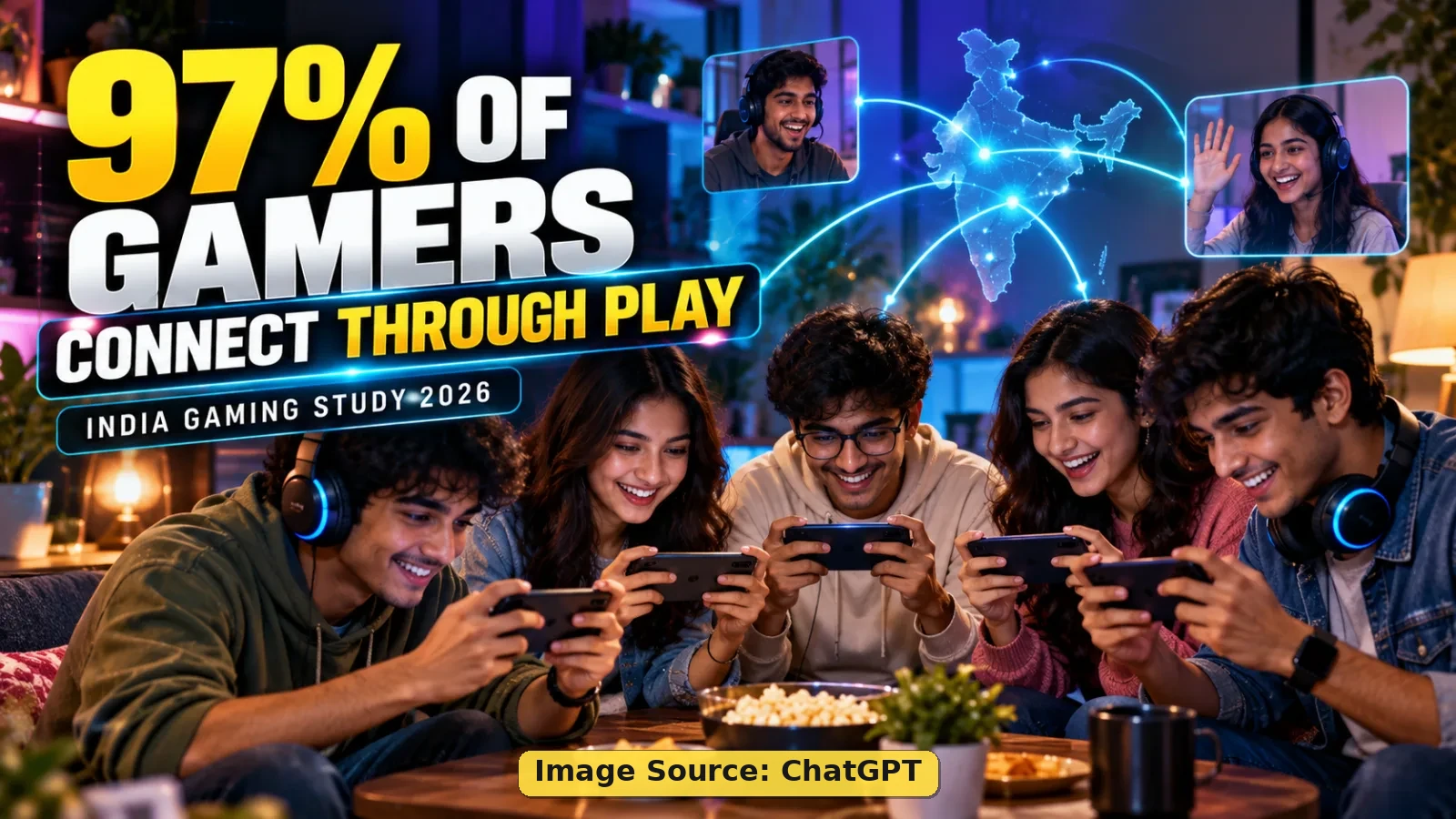
Gaming is becoming an increasingly important way for young Indians to make friends, express themselves and participate in digital communities, according to a new study conducted by Infinix India and CyberMedia Research (CMR).
The research reveals that 97% of serious gamers and 85% of casual gamers believe gaming helps them connect with like-minded people and communities.
The findings challenge the traditional perception of video games as primarily an individual form of entertainment.
For many members of Generation Z, gaming has evolved into a shared activity where friendships develop, conversations continue beyond individual matches and players discover communities built around common interests.
The study surveyed 2,057 smartphone users aged between 16 and 25 across 16 Indian cities, examining how gaming influences social relationships, entertainment preferences, personal identity and smartphone usage.
The results were released ahead of the October 27 India launch of Infinix's GT 50 Pro gaming smartphone.
While the research was conducted in connection with a commercial product launch, its findings highlight an important development in India's digital culture: young people increasingly view gaming as a social experience rather than simply a way to pass time.
Infinix–CMR Study 2026: What the Research Reveals
The study examined gaming behavior among two groups of young smartphone users.
Serious gamers were defined as people who spend more than 12 hours gaming each week, typically participating in sessions lasting over two hours.
The second group consisted of casual and hyper-casual gamers, who generally play for up to 11 hours weekly, often in shorter sessions.
Despite differences in the amount of time spent playing, both groups reported strong social benefits.
Among serious gamers, 97% agreed that gaming helps them discover people who share their interests.
The corresponding figure among casual and hyper-casual gamers was 85%.
The survey also found that social interaction itself was a significant motivation for playing.
Approximately 45% of serious gamers and 51% of casual gamers identified socializing with friends or other players as a reason to participate.
These results reveal an interesting distinction.
Serious gamers were more likely to report that gaming connects them with communities, while casual players were slightly more likely to specifically identify socializing as a motivation.
The difference suggests that social connection is important across gaming habits, although people may experience it in different ways.
A short mobile gaming session can provide an opportunity to catch up with friends, while longer competitive sessions may encourage more sustained interaction with teammates.
Why Online Gaming Has Become a Social Activity for Gen Z
For today's younger generation, social interaction increasingly takes place across both physical and digital environments.
Messaging apps, social networks and video calls help people maintain relationships regardless of location.
Online multiplayer games add something different to that experience: participants can actively work toward a shared goal.
Instead of simply exchanging messages, friends can cooperate, compete, solve problems and celebrate achievements together.
Consider a group of college students living in different cities.
They may find it difficult to meet regularly, but an online game allows them to spend an evening together without traveling.
During a match, players discuss strategies, respond to unexpected challenges and share moments of excitement or disappointment.
The activity itself creates opportunities for conversation.
That shared experience can make gaming an appealing way to maintain friendships.
Games can also introduce people who might never meet through conventional social circles.
Players who enjoy the same titles, gameplay styles or competitive challenges can gradually develop connections.
The Infinix–CMR findings suggest that these relationships have become a meaningful part of the gaming experience for many young Indians.
Friends and Gaming Communities Influence What People Play
Social relationships are not only important during gameplay.
They also influence which games young consumers choose.
The study found that 88% of serious gamers identified friends, family members and gaming communities as major influences on their gaming choices.
Word-of-mouth recommendations were also important when considering gaming devices.
Around 67% identified word of mouth as an influence, while 66% highlighted recommendations from friends and family.
This demonstrates why personal trust remains important even in an industry dominated by online advertising and social media promotions.
A recommendation from someone who regularly plays a particular game may feel more useful than a general promotional message.
Friends can explain whether a game is enjoyable, how competitive it is and whether it works smoothly on the devices they own.
Community discussions also help players learn about updates, technical problems and new features.
For game developers, these patterns reinforce the importance of building experiences that people want to share.
A technically impressive game may attract attention, but opportunities for meaningful interaction can help players remain involved.
Late-Night Gaming Sessions Are Becoming Shared Experiences
One of the study's most recognizable findings concerns the timing of gaming sessions.
Approximately 51% of serious gamers and 49% of casual gamers reported staying up late to explore new game updates or play with friends.
These figures suggest that gaming frequently extends beyond spontaneous entertainment.
For some players, it becomes a planned social activity.
Friends may arrange sessions after classes, examinations or other daily commitments.
Major updates and new in-game events can also provide reasons for groups to reconnect.
This resembles the way people organize movie nights, sports activities or other shared hobbies.
However, late-night gaming also raises questions about maintaining healthy routines.
Spending time with friends is valuable, but regularly sacrificing sleep can affect concentration, mood and daily responsibilities.
The most useful approach is to enjoy the social benefits of gaming while maintaining reasonable boundaries.
Shorter sessions, agreed stopping times and regular breaks can help ensure that entertainment does not interfere with essential activities.
Gaming Communities Can Create a Sense of Belonging
The new research also reveals that gaming relationships can become important enough for players to worry about missing conversations.
Around 40% of serious gamers reported feeling left out when they missed gaming-related discussions.
Among casual gamers, 54% experienced some sense of disconnection.
These findings illustrate how strongly gaming communities can influence social participation.
Players often continue communicating after a match ends.
They may discuss strategies, share humorous moments, exchange updates or arrange future sessions.
Missing those interactions can sometimes create the feeling of being excluded from a shared activity.
That experience is not unique to gaming.
People involved in sports teams, student clubs and online interest groups can experience similar concerns.
The difference is that digital gaming communities may remain active throughout the day, making it easier to feel that conversations are constantly continuing.
A healthy gaming community should therefore encourage participation without making members feel pressured to remain connected at all times.
Friendship should provide enjoyment and support rather than become another source of social stress.
Gaming Is Becoming a Form of Personal Expression
Another major finding involves the relationship between gaming and personal identity.
The study found that 92% of serious gamers believe gaming allows them to express their personalities more effectively.
Similarly, 87% of serious gamers and 79% of casual gamers felt that their gaming setups reflected their identities.
Among serious gamers, 82% said their in-game avatars, skins and outfits represented their personal style.
These figures suggest that gaming has become more than an activity people participate in.
It is also a space where individuals communicate preferences, interests and creativity.
Players may personalize characters, select particular visual styles or create distinctive gaming environments.
For some, these choices reflect the same interests they express through clothing, music or social media profiles.
Others may use games to experiment with imaginative identities that differ from everyday life.
The ability to personalize an experience can make participation feel more meaningful.
It also helps explain why cosmetic customization and avatar design remain important features of many modern games.
However, expressing individuality should not require expensive purchases.
Players can often participate meaningfully through free customization options, teamwork and communication.
Female Gamers Are an Important Part of India's Gaming Community
The study also challenges outdated assumptions about who participates in mobile gaming.
Nearly one-third of surveyed gamers were women, with female participation reaching 36% among casual and hyper-casual gamers.
The figures demonstrate that gaming communities are not exclusively male spaces.
Women participate in mobile gaming for entertainment, social interaction and personal enjoyment, just as other players do.
This growing visibility creates opportunities for developers and community organizers to make gaming environments more welcoming.
Accessible gameplay, effective moderation and meaningful reporting tools can help reduce barriers to participation.
Players should be able to enjoy multiplayer experiences without facing harassment or unfair treatment.
Inclusive community design benefits more than one demographic group.
When games provide clear rules, respectful communication systems and accessible features, more people can participate comfortably.
For India's gaming industry, understanding the diversity of its audience will be increasingly important as participation expands.
Smartphones Are Making Social Gaming More Accessible
One reason mobile gaming has become central to India's digital culture is its accessibility.
Smartphones allow people to participate without purchasing a separate gaming console or dedicated computer.
Players can communicate with friends, join multiplayer sessions and explore games using devices they already carry.
The convenience is particularly relevant for students and younger consumers whose entertainment budgets may be limited.
Mobile games can also fit into different daily routines.
Some users prefer quick sessions during free time, while others enjoy longer competitive matches.
However, a satisfying multiplayer experience depends on more than whether a game can be installed.
Players also need stable connectivity, responsive controls, appropriate battery life and reliable device performance.
Technical problems can interrupt not only the game but also the shared experience.
A sudden connection failure during a team match, for example, can affect several players at once.
That makes the performance of gaming devices relevant to both entertainment quality and social interaction.
Battery Drain and Overheating Remain Major Concerns
Although the study emphasizes gaming's social importance, it also identifies familiar technological frustrations.
Approximately 62% of serious gamers reported battery drain as a concern.
Meanwhile, 60% of casual and hyper-casual gamers identified overheating as a problem.
These issues become particularly noticeable during extended gaming sessions.
Modern mobile games can place considerable demands on processors, graphics systems and wireless connectivity.
As the device performs intensive calculations, it may generate heat and consume battery power more quickly.
Excessive temperatures can cause smartphones to reduce performance to protect internal components.
For players, this may result in frame-rate reductions, slower responses or uncomfortable device temperatures.
Battery limitations can interrupt gaming sessions or require frequent charging.
For anyone comparing gaming smartphones, the practical lesson is to evaluate sustained performance rather than relying only on headline specifications.
Battery endurance, cooling effectiveness, screen responsiveness and connectivity stability are all worth considering.
A powerful processor is useful, but the overall experience depends on how well the device performs during real gameplay.
Infinix GT 50 Pro Launch Connects With the Study's Findings
The Infinix–CMR research was released shortly before the planned India launch of the Infinix GT 50 Pro on October 27, 2026.
The company has positioned the device around its broader "Game Together" ecosystem.
The announced ecosystem includes the gaming smartphone, GT NX Controller, GT NX Station, MagCharge Cooler 2.0 and cloud-gaming capabilities.
The concept reflects Infinix's effort to move beyond conventional discussions of processor speed and benchmark results.
Miraj Gupta, Chief Marketing Officer at Infinix India, emphasized the role of gaming in bringing together friends, couples and family members.
The company's strategy suggests that gaming devices are increasingly being marketed as tools for shared entertainment.
However, the survey results should not be interpreted as independent evidence that any particular smartphone is superior.
The research was associated with a commercial launch, and the capabilities of individual products require separate technical evaluation.
Consumers should compare actual performance, pricing, software support and reliability before selecting a device.
What the Study Means for India's Gaming Industry
The findings provide useful insights for game developers, smartphone manufacturers and digital community platforms.
For developers, the research highlights the importance of multiplayer interaction and community-building tools.
Features that make it easier to find teammates, communicate respectfully and participate in shared events may improve the gaming experience.
For smartphone manufacturers, the findings suggest that reliable connectivity and sustained performance are essential.
Consumers are not evaluating devices exclusively through technical specifications.
They are also considering whether a device allows them to enjoy games with friends without unnecessary interruptions.
For community organizers and esports groups, the research reinforces the importance of supportive environments.
Tournaments, interest-based groups and collaborative gaming events can help participants develop new connections.
However, growth should not come at the expense of player safety.
Moderation, privacy protection and clear community standards remain important as online gaming audiences expand.
What Parents Should Understand About Young Gamers
For parents, the study offers an opportunity to reconsider assumptions about gaming.
A young person using a smartphone for gaming may also be communicating with friends, practicing cooperation or participating in a community.
That does not mean unlimited gaming is beneficial.
The amount of time spent playing still matters, particularly when it affects sleep, education, physical activity or relationships outside the game.
A constructive approach begins with understanding the games young people enjoy and why they play them.
Parents can ask whether a game involves teamwork, whether the player communicates with strangers and what safety features are available.
For younger users, checking privacy settings and limiting unwanted contact can be especially important.
Families may also benefit from agreeing on reasonable gaming schedules.
The goal should be to preserve the positive aspects of social entertainment while maintaining healthy routines.
Does Gaming Actually Improve Social Relationships?
The study provides strong evidence that surveyed young gamers perceive social value in their gaming activities.
However, there is an important distinction between reported experiences and measured outcomes.
The 97% figure reflects participants' views about connecting with like-minded people.
It does not prove that gaming improves every player's friendships, eliminates loneliness or produces better psychological health.
Social experiences differ considerably.
A respectful gaming community can provide encouragement and companionship.
An environment dominated by harassment, exclusion or intense pressure can have the opposite effect.
The quality of relationships therefore matters as much as the number of interactions.
Gaming can create opportunities for connection, but meaningful friendships still depend on mutual respect, communication and shared trust.
Future research could examine whether online gaming friendships remain stable over time and how those relationships interact with offline social lives.
Five Ways to Build Better Friendships Through Gaming
For players who want gaming to become a more positive social activity, several practical habits can help.
Choose communities carefully. Look for groups with clear rules, respectful communication and shared interests.
Prioritize enjoyable teamwork. Winning can be satisfying, but cooperation and encouragement often make shared experiences more memorable.
Maintain personal boundaries. Avoid sharing sensitive information with unfamiliar players, and use privacy controls when necessary.
Balance gaming with daily life. Make room for sleep, education, exercise and relationships outside gaming.
Welcome new players. Helping beginners understand a game can strengthen communities and make the experience more rewarding for everyone.
These habits can support healthier interactions regardless of a player's skill level or preferred gaming platform.
Future of Mobile Gaming in India: Connection May Matter as Much as Performance
The Infinix–CMR findings suggest that India's mobile gaming market is entering a more socially focused phase.
Gaming technology will continue improving, with manufacturers competing on display quality, cooling systems, battery life and processing performance.
However, technical improvements alone may not determine which games and platforms become popular.
Players also value the ability to maintain friendships, express individuality and participate in communities.
This could influence how future games are designed.
More attention may be given to collaborative activities, accessible communication tools, community moderation and personalized experiences.
Smartphone manufacturers may also increasingly consider how devices support group gaming rather than focusing exclusively on individual performance.
Nevertheless, the industry's long-term success will depend on creating experiences that are enjoyable, inclusive and sustainable.
Gaming communities thrive when people feel comfortable participating, not merely when technology allows longer sessions.
Final Outlook: Gaming Is Becoming a Place Where Friendships Grow
The Infinix–CyberMedia Research study offers a revealing look at the changing role of mobile gaming in India.
With 97% of serious gamers and 85% of casual gamers saying gaming helps them connect with like-minded people, the findings demonstrate how important online communities have become to many young smartphone users.
Gaming is no longer viewed only as a competition or a way to spend spare time.
For many participants, it provides opportunities to maintain friendships, meet people with shared interests and communicate personal identity.
The research also shows that social participation brings challenges, including fear of missing out, technical frustrations and the need for healthy boundaries.
These findings are relevant to players, families, game developers and smartphone companies alike.
As India's gaming audience continues evolving, the most successful experiences may be those that combine reliable technology with meaningful human interaction.
The biggest lesson from the study is that gaming's value is not measured only in scores, rankings or hours played. For many young Indians, its lasting appeal comes from the friendships and shared experiences created along the way.